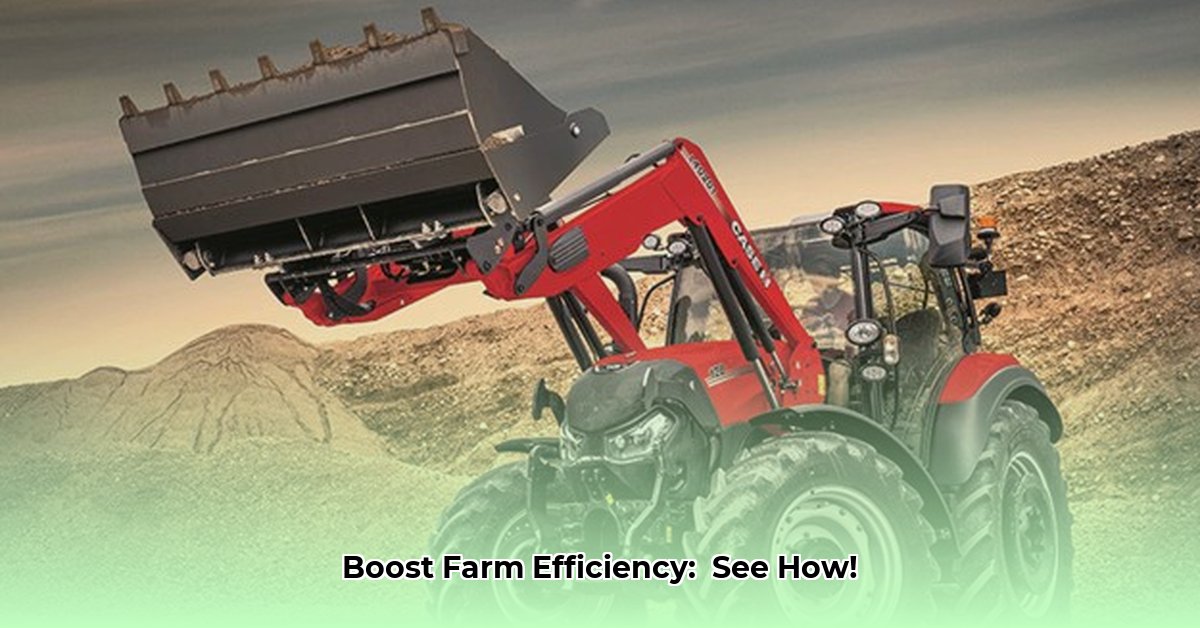
Understanding Your Case IH Loader and Attachments: More Than Just Muscle
Case IH offers a diverse range of front-end loaders and implements designed for seamless integration with their tractors. Selecting the correct loader for your specific tractor model is crucial for optimal performance. Think of the loader as your farm's versatile multi-tool, with interchangeable attachments expanding its capabilities significantly. These attachments, ranging from buckets and forks to specialized tools, transform the tractor into a highly adaptable machine, capable of handling a wide array of tasks. This adaptability is key to maximizing efficiency and minimizing wasted time and resources. The effectiveness of the entire system—tractor, loader, and attachments—relies on this seamless integration. For information on replacement parts, check out this helpful resource: Loader Cylinder Repair.
Making the Most of Your Case Tractor Front End Loader: Practical Tips for a Sustainable Farm
This section details actionable strategies to optimize your Case IH loader and implement usage while minimizing environmental impact and maximizing your return on investment (ROI).
Fueling Efficiency: Saving Money and the Planet
Fuel efficiency is paramount for both financial and environmental reasons. Small changes add up to significant savings:
- Smooth Operation: Avoid jerky movements. Smooth, controlled actions significantly reduce fuel consumption. (Think of it like driving a car—aggressive driving burns more gas.)
- Preventive Maintenance: Regular maintenance ensures your loader runs at peak efficiency, minimizing fuel waste. (A well-maintained machine is a fuel-efficient machine.)
- Optimized Load Sizes: Overloading strains the engine and increases fuel consumption. Carry only necessary amounts to maximize efficiency. (Avoid unnecessary weight.)
Keeping Your Loader in Top Shape: Preventative Maintenance is Key
Regular maintenance prevents costly breakdowns and extends the lifespan of your equipment. This translates to long-term cost savings and reduced environmental impact:
- Routine Inspections: Regularly inspect hydraulic lines, hoses, and attachments for wear and tear. Early detection prevents major problems. (Catching small issues prevents large, expensive repairs.)
- Consistent Lubrication: Proper lubrication ensures smooth operation and prevents excessive wear. (Well-lubricated parts function more efficiently.)
- Adhering to Schedules: Follow Case IH's recommended service schedule diligently for optimal performance and longevity. (Preventative maintenance is cheaper than reactive maintenance)
Choosing the Right Tool: Matching Attachments to the Task
Selecting the appropriate implement for each task significantly improves efficiency and reduces wasted effort:
- Soil Type Consideration: Different soil conditions necessitate different attachments. (A heavy-duty bucket is needed for rocky soil, while a lighter bucket works better in softer soil.)
- Task-Specific Attachments: Choose the attachment that suits the specific task for optimized performance and reduced time. (Using the wrong tool will always take longer and use more fuel.)
Smart Farming: Data-Driven Decisions (Even Without Built-In Systems)
Though not all Case IH loaders have fully integrated data systems, you can still leverage data to improve efficiency:
- Fuel Consumption Tracking: Use fuel monitoring to track fuel usage, helping identify areas for improvement. (Tracking fuel use helps pinpoint inefficiencies.)
- Usage Pattern Analysis: Analyzing usage patterns reveals optimization opportunities. (Understanding your operation highlights areas for improvement.)
- Advocating for Future Tech: Provide feedback to Case IH advocating for improved data integration in future loader models. (Your feedback shapes future technology.)
Safety First: Protecting Yourself and Your Crew
Safety is paramount, both for the operator and the environment.
- Comprehensive Training: Ensure all operators are thoroughly trained on safe operation procedures. (Proper training prevents accidents.)
- Strict Adherence to Protocols: Always adhere to all safety regulations and manufacturer guidelines. (Safety procedures are not suggestions.)
- Regular Safety Checks: Conduct thorough safety inspections before each use. (Regular safety checks are essential preventative measures.)
The Future is Now: What’s Next for Case IH Loaders?
The agricultural industry is moving towards increasingly sustainable and technologically advanced equipment. Future Case IH loaders will likely integrate advanced features such as:
- Enhanced Data Integration: More comprehensive data systems will provide detailed insights into machine performance, fuel efficiency, and operational effectiveness.
- Autonomous Operation: Expect greater automation, potentially including self-guided systems and predictive maintenance capabilities, reducing operator workload and increasing efficiency.
- Predictive Maintenance: Advanced sensors and AI will predict potential issues, minimizing downtime and optimizing maintenance schedules.
Getting Started: Further Exploration
To enhance farm efficiency and sustainability, consult these resources:
- Case IH Website: Explore the Case IH website for detailed information on their loaders, implements, and sustainability initiatives.
- Local Case IH Dealer: Connect with your local dealer for personalized advice, maintenance services, and access to local resources.
- Governmental Subsidies and Grants: Research available government programs and grants that can support investments in sustainable agricultural equipment.